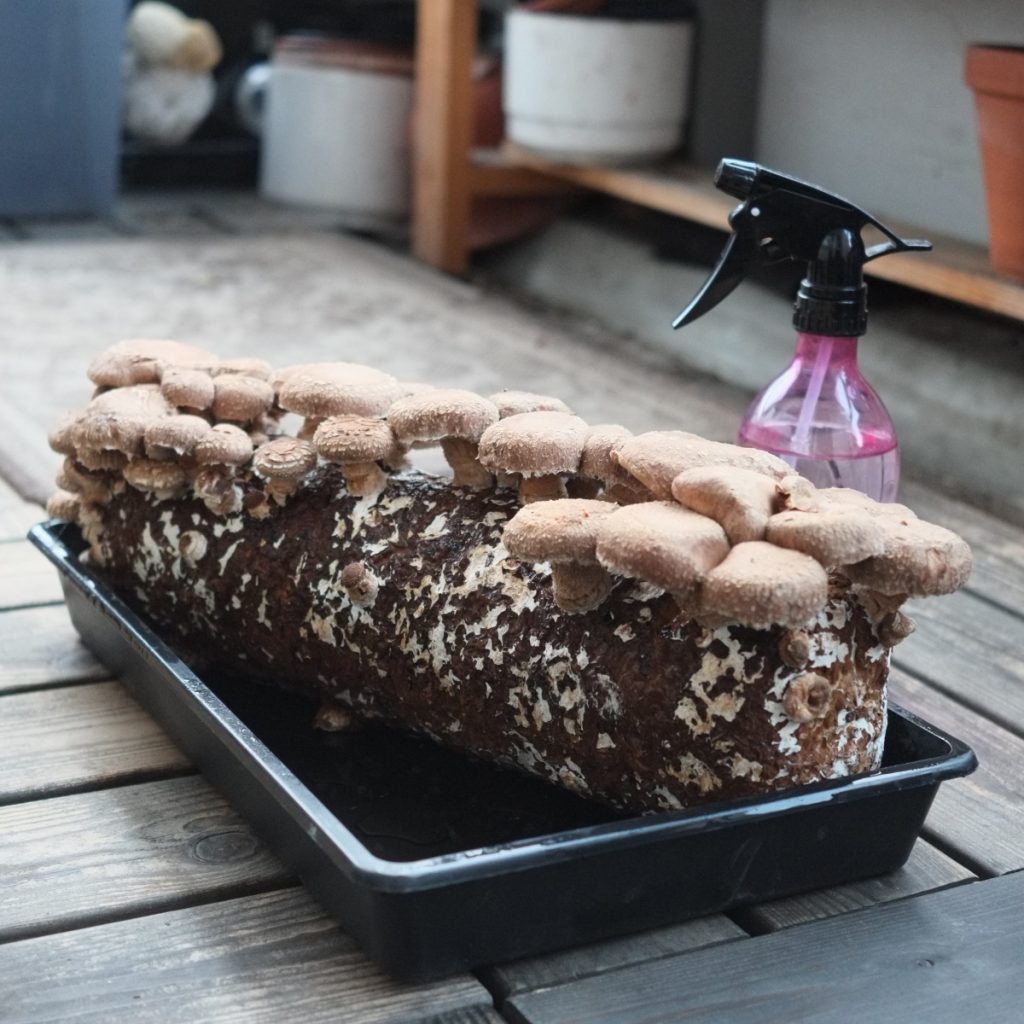
Mushroom blocks
Mushroom blocks are the easiest way to grow fresh mushrooms at home throughout the year.
Mushroom blocks are bags of substrate (made of sterilized wood chips or straw) that have been incubated with a certain type of mushroom, and are ready to start producing! All you need to do when you receive one at home is provide the right conditions for the mushrooms to come out.
The following mushroom blocks are available for purchase in our online store:
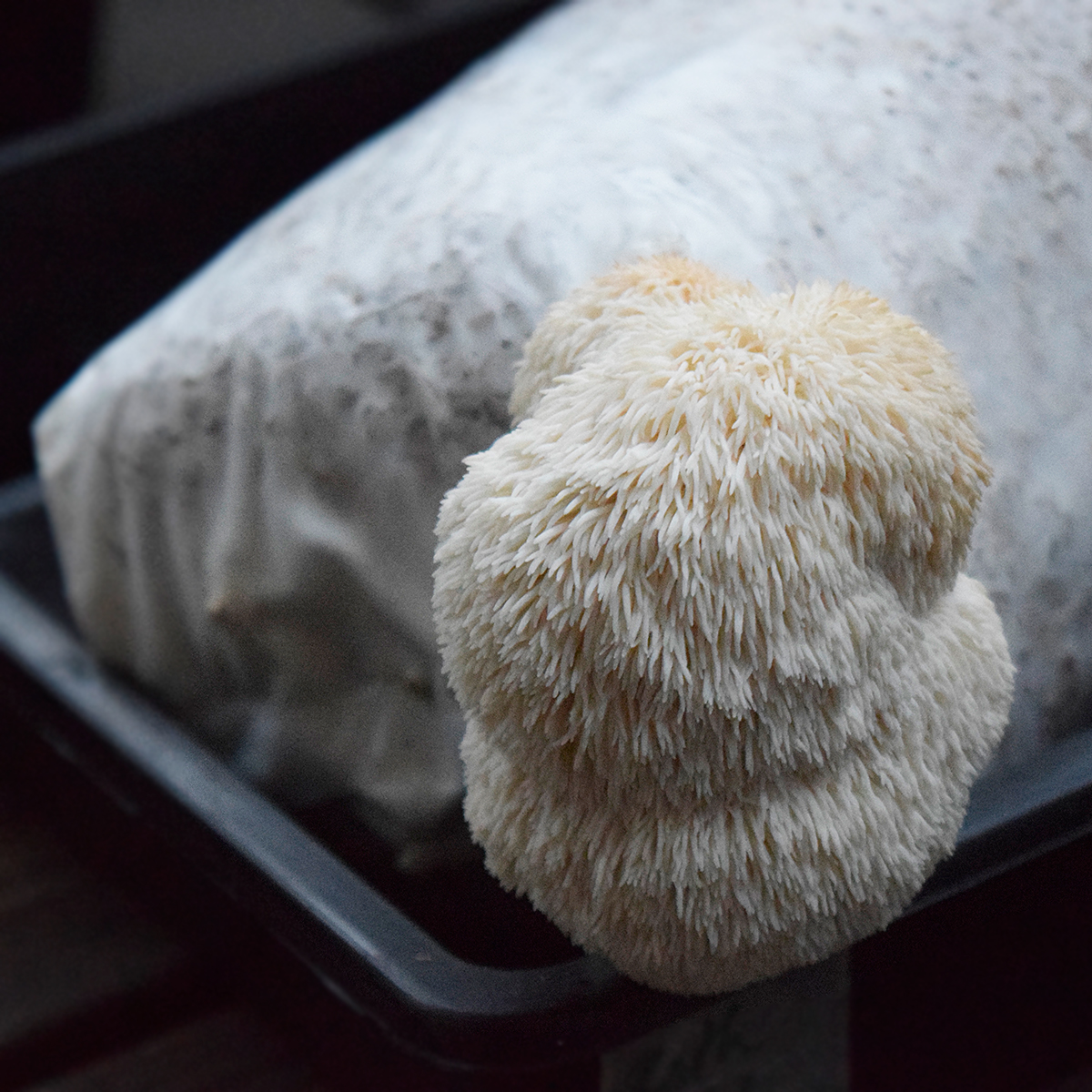
Lion’s mane
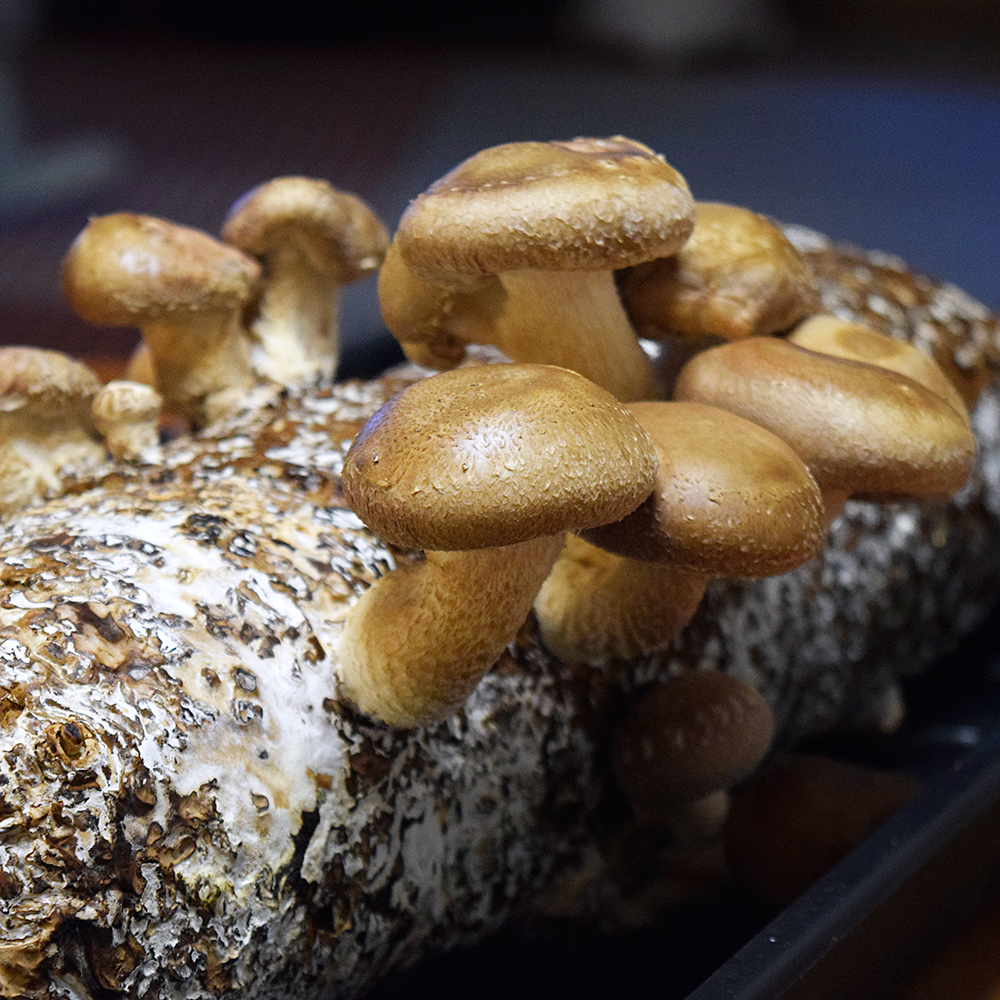
Shiitake
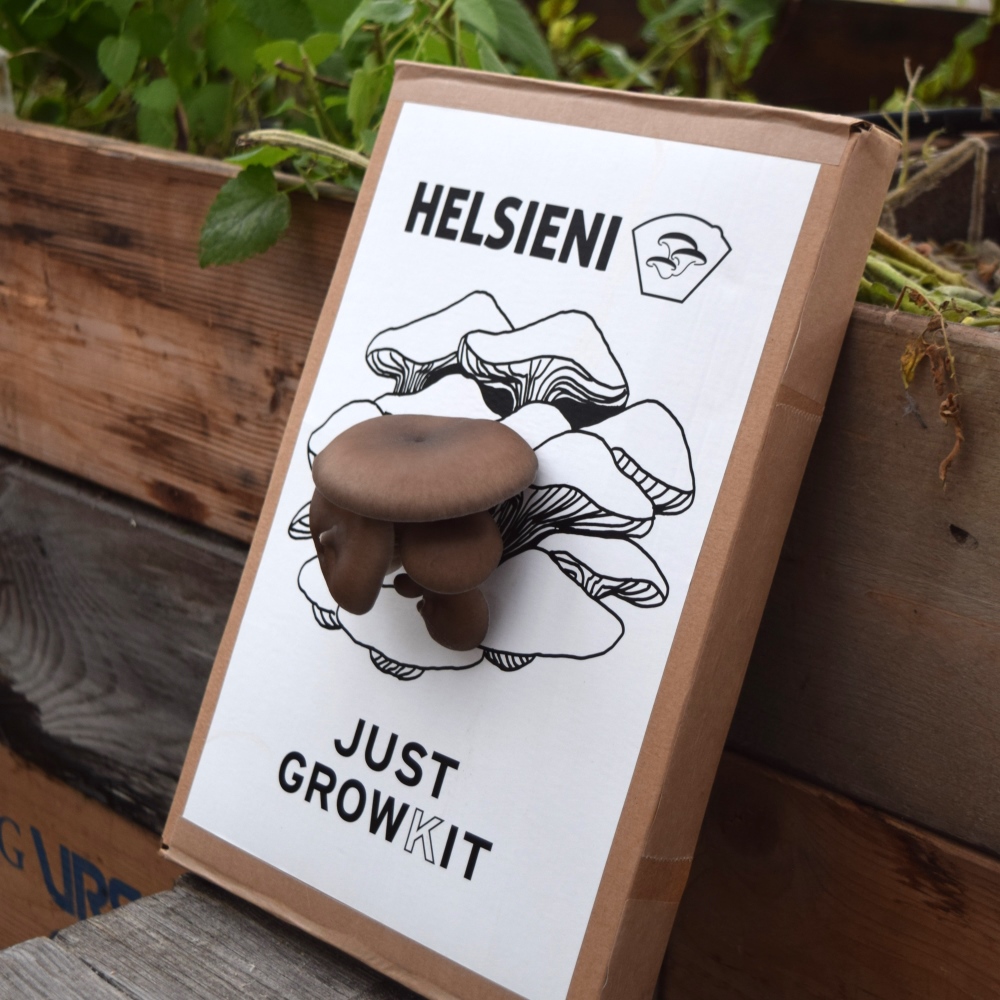
Grey oyster
How to start growing mushrooms with a mushroom block
Mushroom blocks can be stored in the fridge for some weeks, but they are designed to start to giving mushrooms right away, so start the growing process as soon as possible.
Equipment
☛ A mushoom block available in our webstore
☛ A plate or tray
☛ Spray bottle with water
☛ A paper or plastic bag or mini greenhouse
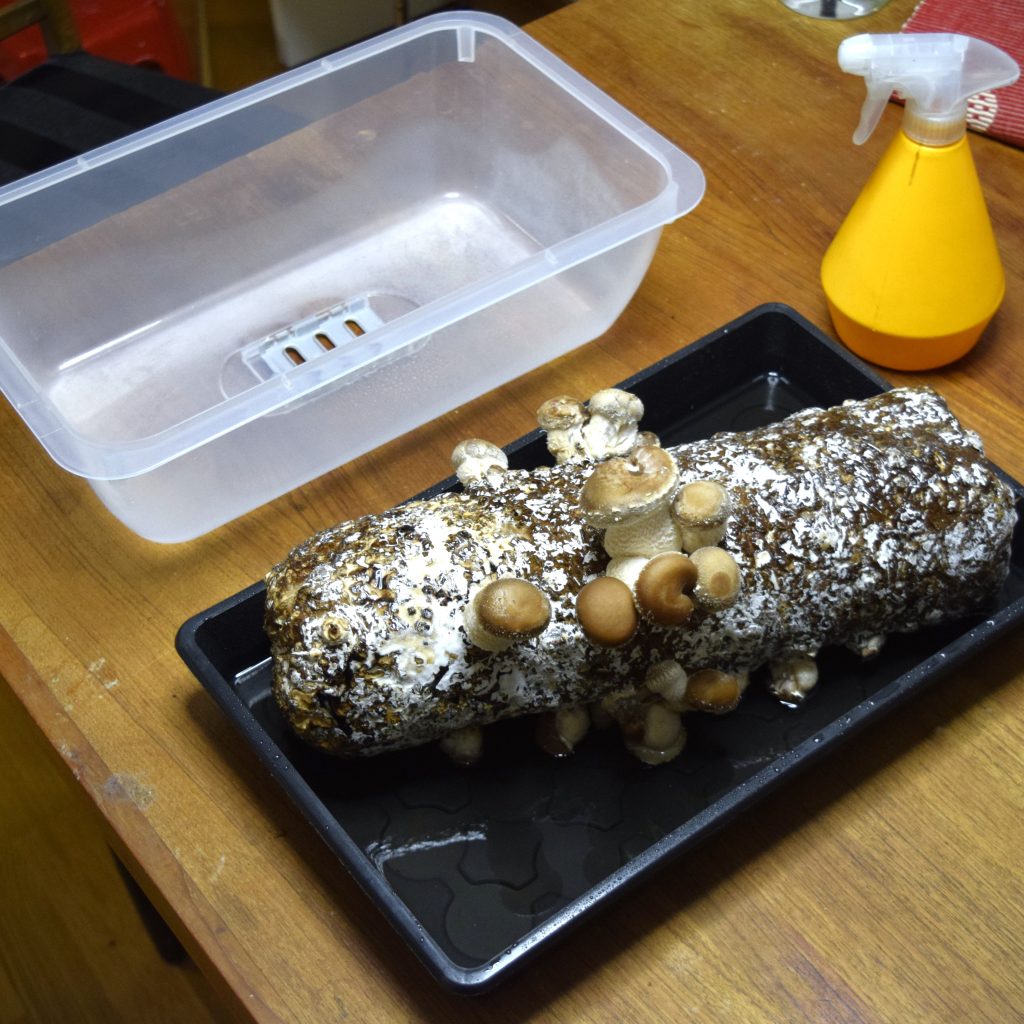
Fresh air
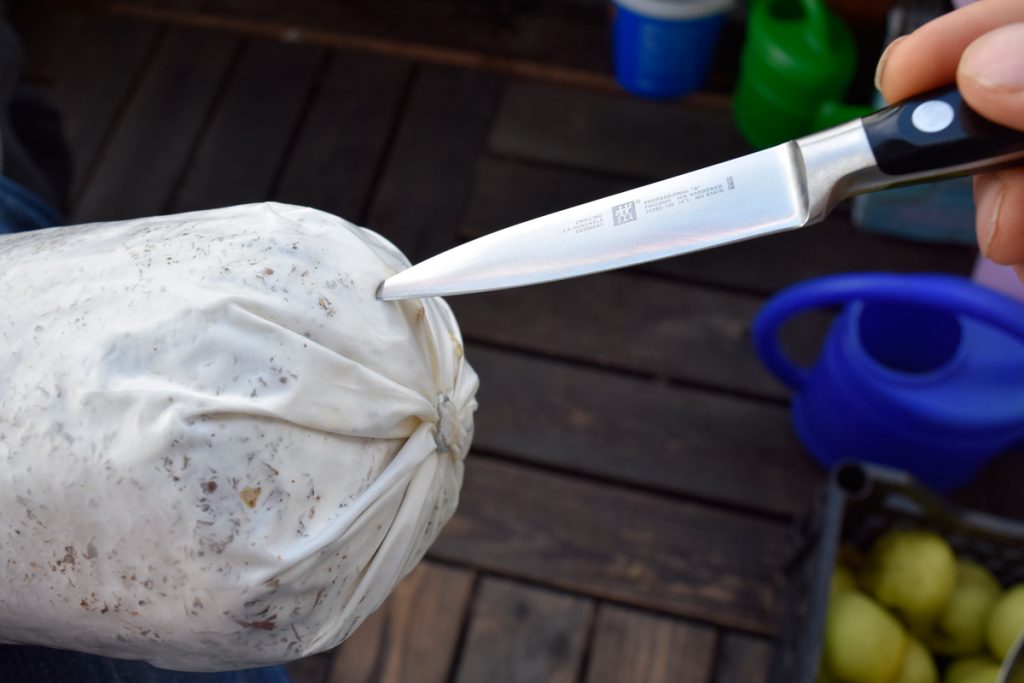
Exposing some of the mycelium to fresh air will trigger it to start making mushrooms. Most mushrooms will grow nicely through 5-10 cm cuts or X’s in the plastic.
NOTE: For our lion’s mane blocks you need to make two 5 cm cuts through the plastic on either end of the block.
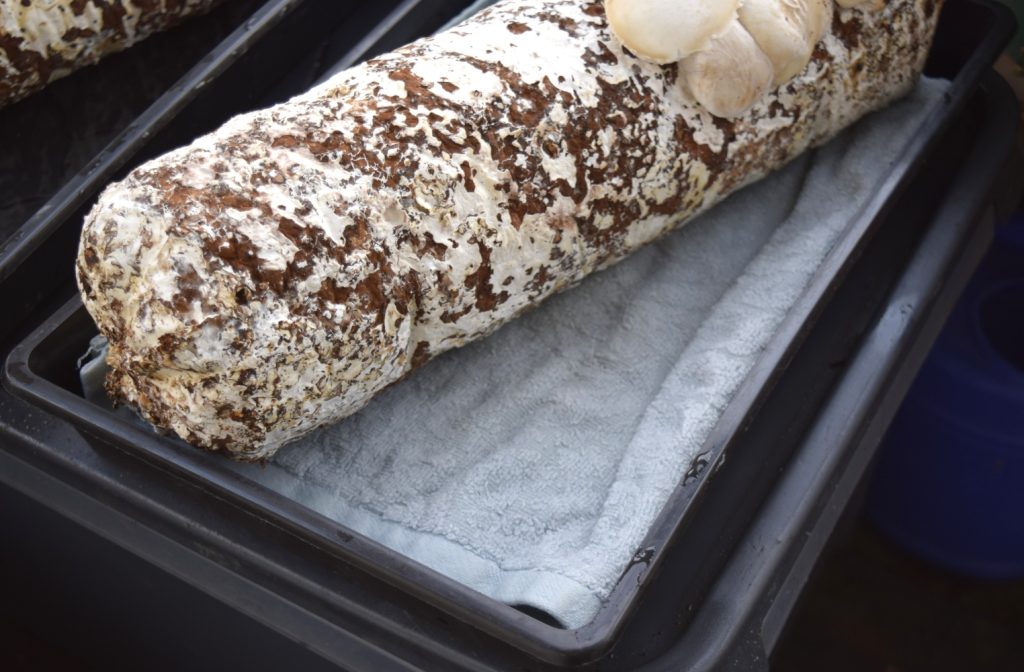
NOTE: For shiitake you remove the plastic completely from the block. It will develop a brown ‘skin’ to protect the substrate.
Moisture
Since mushrooms are 90% water, moisture is very important for their proper growth. Even though the substrate has the correct moisture level when it is in the plastic, it can dry out, so creating a humid environment is important to get good looking mushrooms.
from below
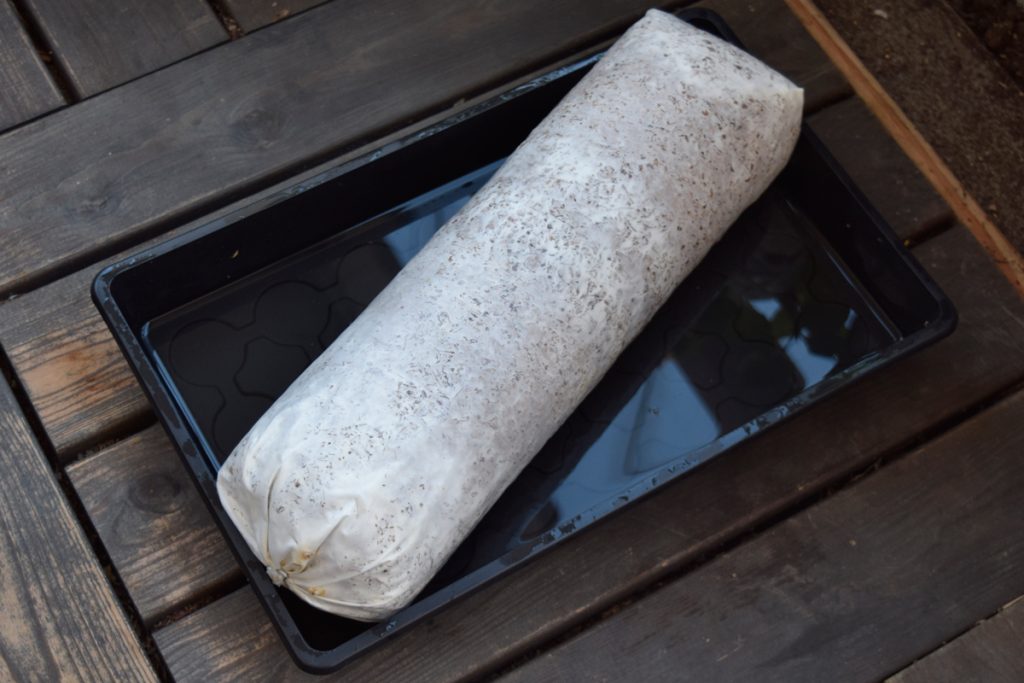
Place the block on a plate or on a shallow plastic tray with a moist towel on it, or a small layer of water. This will bring a constant flow of evaporation near your developing mushrooms. The towel and water should be changed every few days to prevent molds or bacteria from growing.
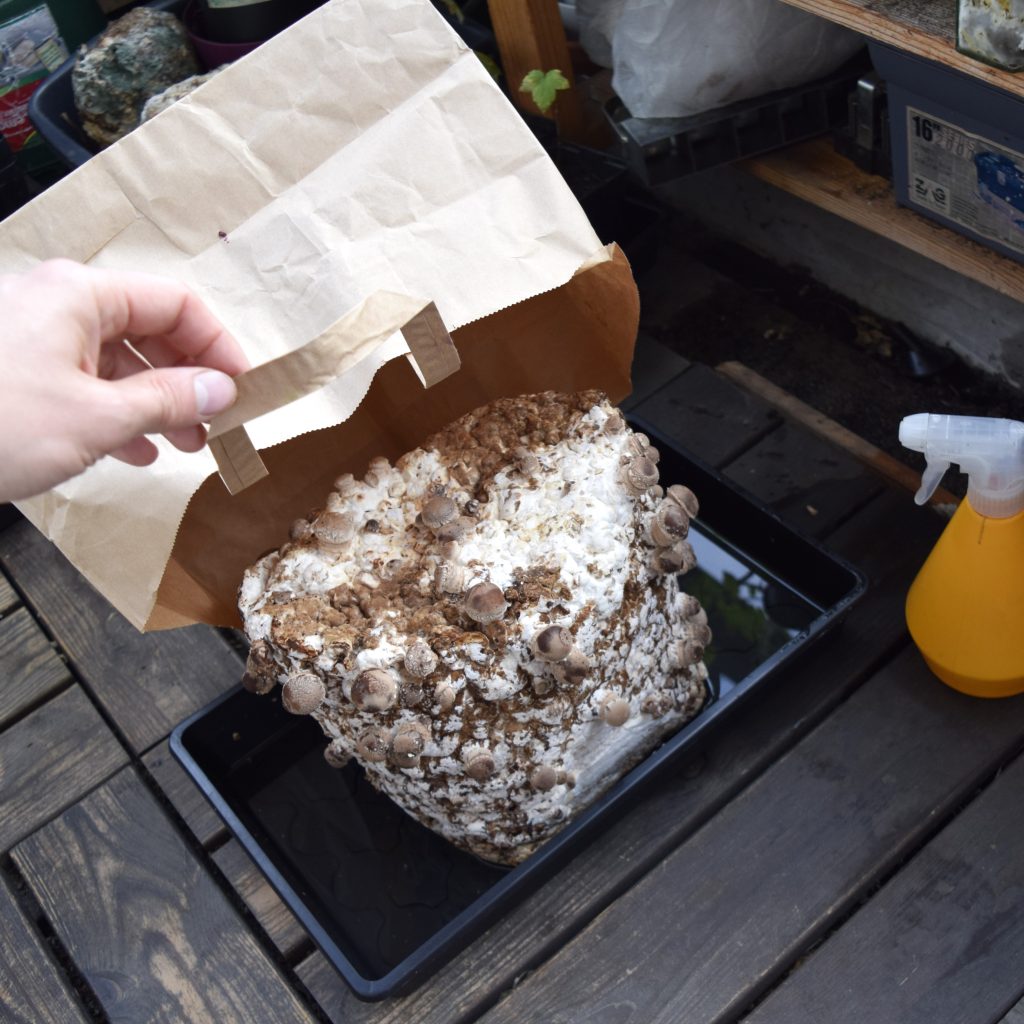
from above
You can manually spray your mushroom block with a water mister, or if you have a humidifier you can point it towards the exposed cuts. TIP: Lion’s mane mushrooms don’t grow well when sprayed directly, so spray around them.
Make a humidity tent by placing a plastic or paper bag with 2 holes in it over the block as loosely as possible. It is important that mushrooms get enough fresh air, otherwise they may grow in elongated shapes. A mini-greenhouse or a cardboard box with holes is another great way to maintain a humid environment.
Temperature & Light
The best temperature for growing mushrooms is around 15-19°C, as lower air temperatures tend to have higher relative humidity. From late spring to autumn a shaded spot on the balcony can be a great place to place your mushroom block. In winter, any room with higher humidity and some light will do. Mushrooms don’t mind the cold, and will still grow slowly at 10C.
Mushrooms do not need sunlight, they get all their energy from the substrate. They will grow just fine with 8-12 hours of artificial light or indirect sunlight. Lion’s mane mushrooms can be pink in color if they are receiving too much light. Place them in a more shaded place if they are very pink.
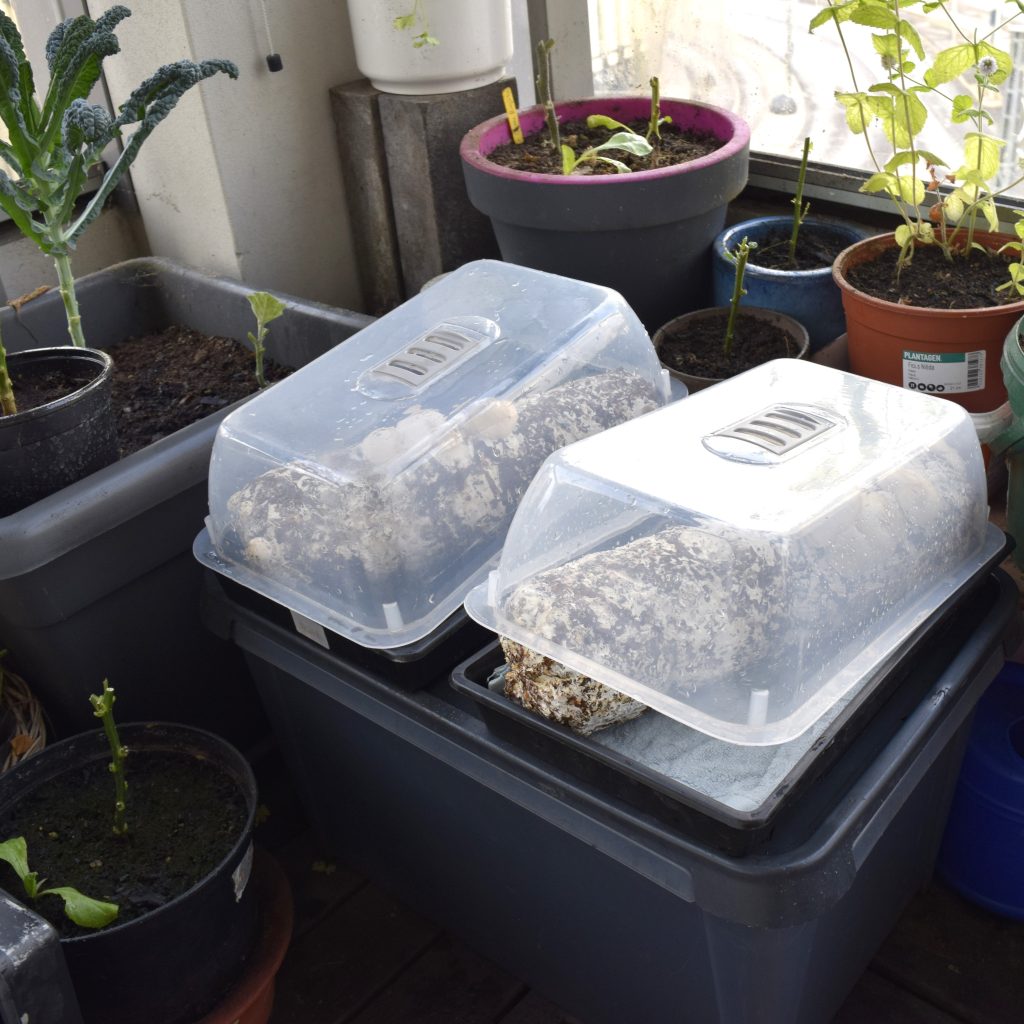
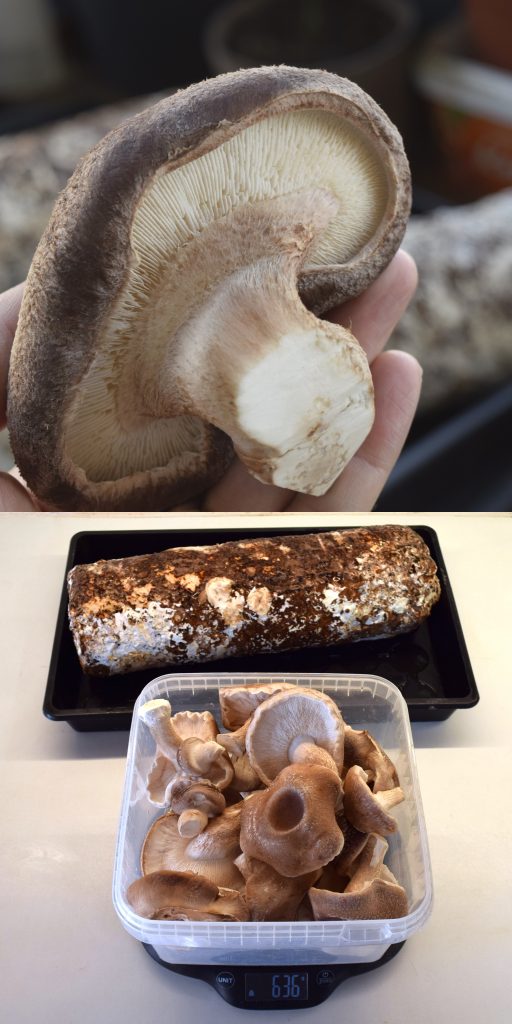
Harvesting
Check your block daily, as mushrooms grow very fast. Harvest oyster and shiitake mushrooms when the gills are starting to be visible. Remove all mushrooms, also stems, from your substrate.
TIP: Harvest Lion’s Mane when the ‘hair’ of the mushrooms is about 5mm long or when the color changes from white to cream-yellow. This discoloration is a sign that the mushroom is drying out, and it can happen before the mushroom gets hair.
Mushroom blocks can give another – albeit smaller – crop after about 2-4 weeks. After harvesting the first flush of mushrooms, leave the block where it is and make sure there is no standing water around it. After about 2 weeks, you can put it back in a humid environment.
TIP: Soak your shiitake block in water for 12-24 hours to re-hydrate it. Weigh it down with something heavy so that it ‘drinks up’ as much water as possible. This will give a bigger second harvest.
What to do with old mushroom blocks
Mushroom blocks that have given two harvests are called ‘spent substrate’ because they will not give much more mushrooms. The mycelium has used most of the water and consumed easily accessible nutrients from the straw or wood substrate, but the mycelium is still alive and ready to grow into new substrates!
Store it for spring
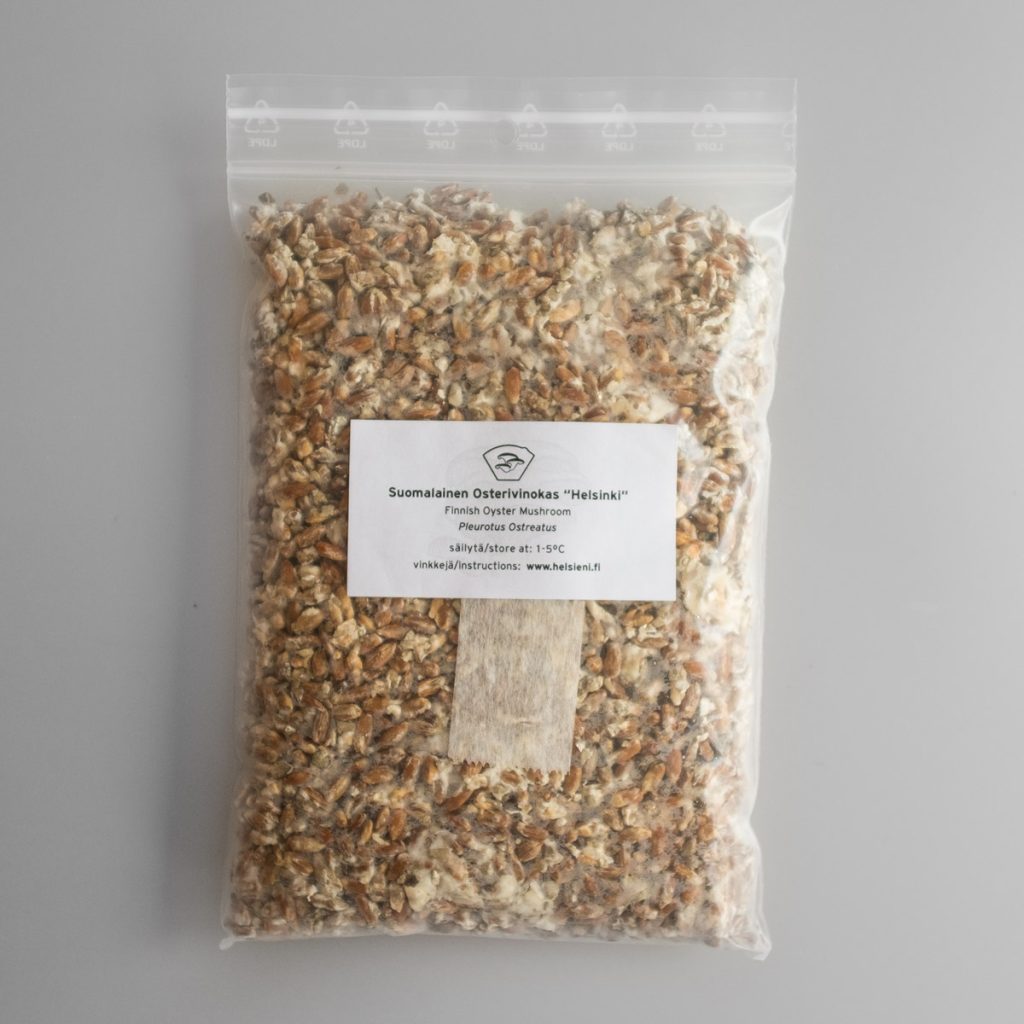
You can put the whole block or some of the mycelium in a zipper bag with a bit of water and store it in the fridge for months. Later, you can take a few spoonfuls of living mycelium and start a Growkit.
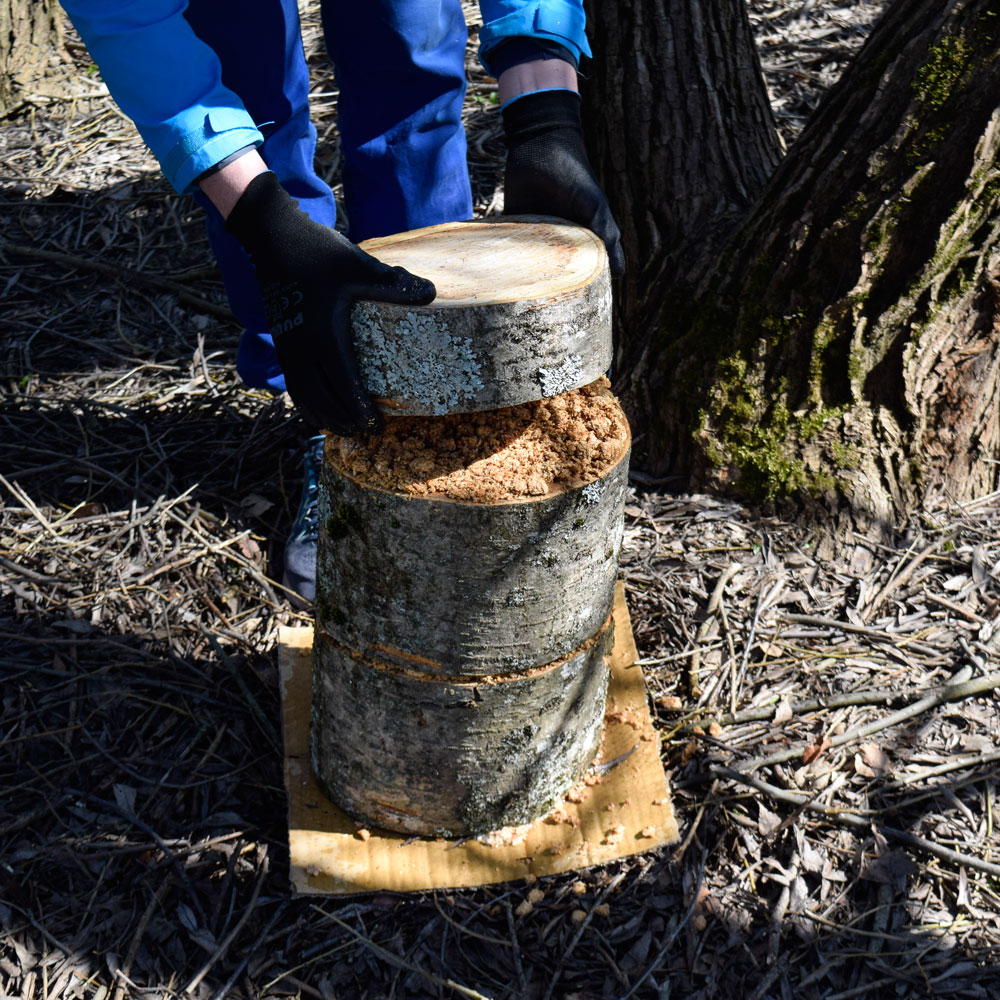
Make a totem!
Possibly the best way of upcycling your block is to make a mushroom totem in your garden. One mushroom block can be used to make about 1-2 totems. A totem will start giving mushrooms after about 1-2 years, depending on the mushroom species, and can keep producing for many years.
Bury your block
The easiest way to get another harvest is to place your block in the garden to make a mini mushroom bed. There’s something magical that happens outdoors when mushroom blocks are surrounded by plants. Because of the cycle of day and night temperatures and the photosynthesis of plants providing fresh air, mushrooms flourish outdoors. Even old mushroom substrate that you have given up on can come back to life, so give it a try!
Blocks buried in the garden usually give a few harvests before decomposing into the soil. Mycelium can tolerate frost, so a block put outside in the autumn can give a flush of mushrooms in the spring when temperatures are above 10C again.
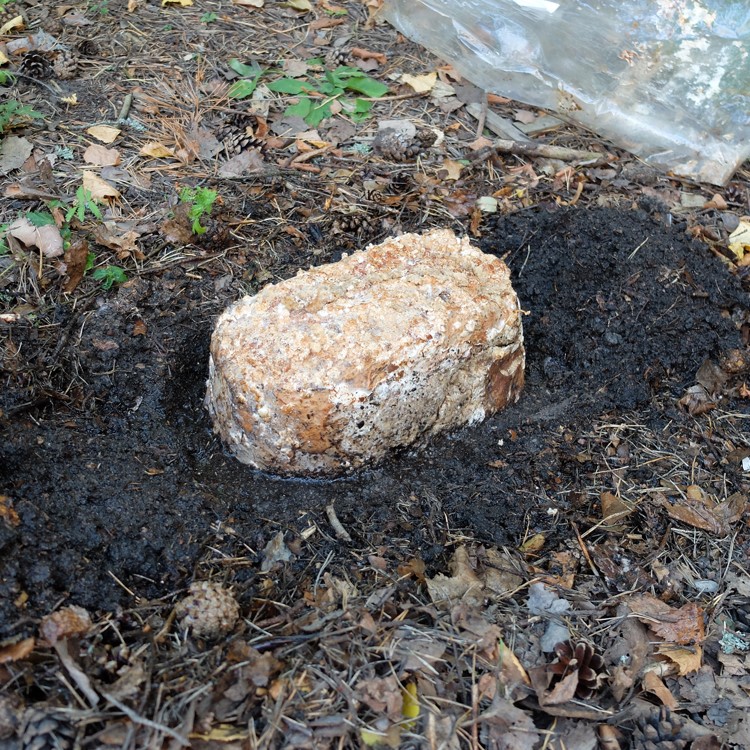
- Find a shaded spot in the garden. A low or moist spot is ideal. If you have a bit of a dry garden, you can dig a shallow hole to bury the block partially. This will help the mushroom mycelium to extract moisture from the soil.
- Brush aside any mulch on the ground or cut / mow some grass if necessary
- Place the block on the ground, or bury it a few centimeters, and cover with leaves or other mulch like wood chips, pine needles, etc. TIP: Place a garden marker in your block with the type of mushroom, so that you don’t forget where you put it.
- Water generously with a few canisters of water. And repeat a week later if there is no rain.
- Check on your block after 2-4 weeks to see if there are any mushrooms popping out around your block!